CreateBases
Hand over a knowledge base, not a folder of files
- Category
- Data & Analytics
- Primary Subcategory
- Enterprise Knowledge Search & AI Context Layer
 View in the Claude registry
Integration details
Description
Base turns a pile of documents into a permissioned, shareable knowledge base. Upload files and Base extracts a cited knowledge index: claims, entities, events, timelines, and figures that disagree across sources. Every extracted claim is grounded in a verbatim quote from a source document, and anything that cannot be matched back to its source is dropped rather than guessed. Connected to Claude, Base lets you search across every knowledge base you own or have been given, read the derived index rather than re-reading raw files, reconcile numbers that conflict between documents, and pull whole documents or spreadsheet rows when you need to compute over them. With write access you can add documents, revise spreadsheets in place, leave comments, and open task threads so collaborators and their own AI assistants can see what work is already in flight. Permissions are enforced on the server, never in the interface. A claim is published only when the reader can see every source supporting it, so a summary can never reveal something the reader was not allowed to read directly. Share links can be revoked or expired at any time, and access is re-checked on every single call.
- Integration type
- Connector
- Verification status
 Community connector
- Platform
- Claude
- Primary Subcategory
- Enterprise Knowledge Search & AI Context Layer
- Secondary Subcategories
- None listed
- Brand
- Base
- Access
- Account required
- First tracked
- 2026-08-07
- Tool count
- 19
- Geography
- US
The Primary Subcategory used for this profile’s headline score.
Other Subcategories where the Integration is listed.
Claude Discoverability Score
Claude Connector discovery is coming soon
Community Connectors only appear in Claude’s registry.Once verified, organic discovery begins and we can calculate your score.Read more about Community Connector verification.
No spam. Unsubscribe any time.
No spam. Unsubscribe any time.
What discovery looks like
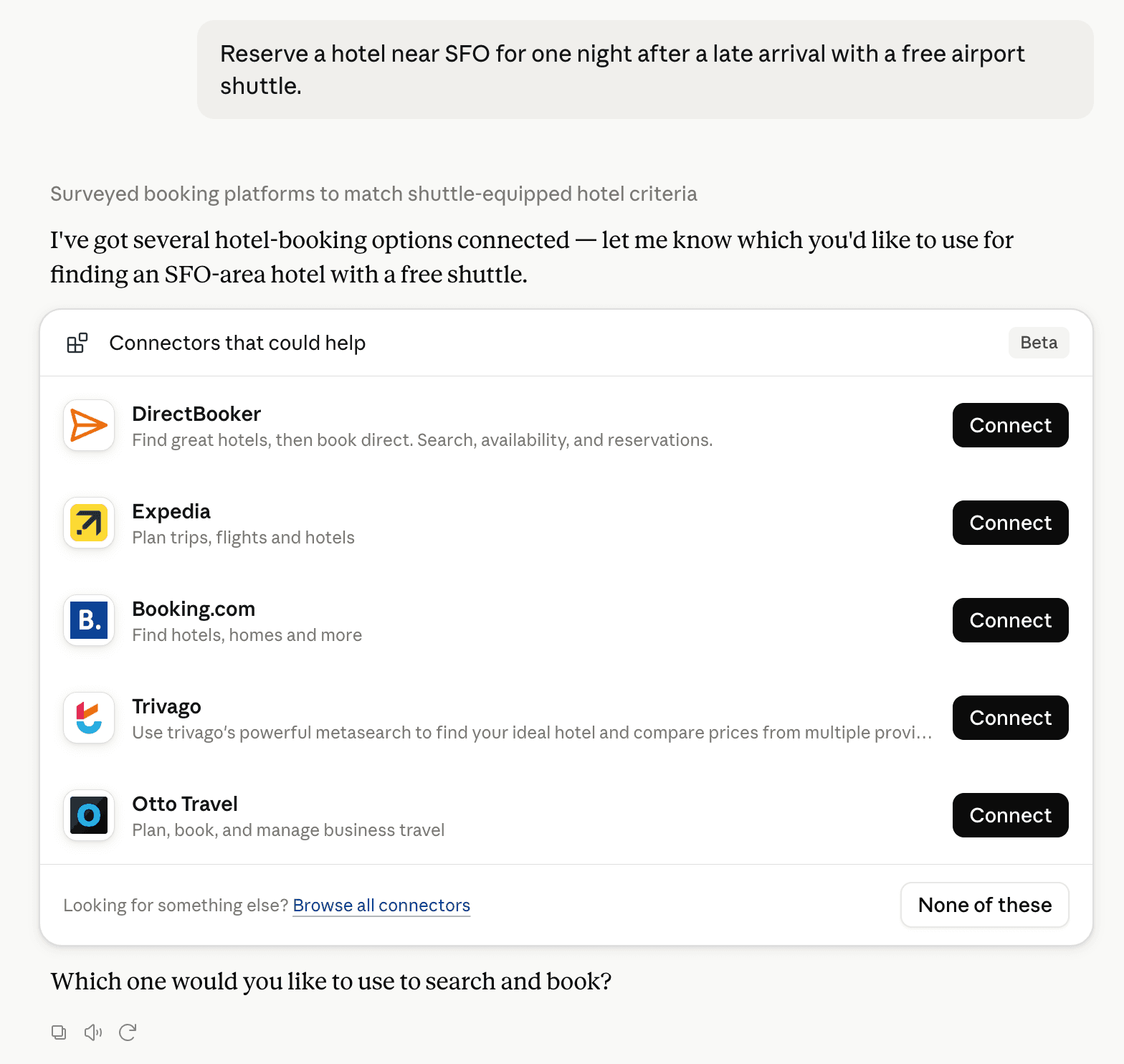
Claude can surface verified Connectors when they match a user’s Prompt.
How Claude Connector discovery works
Your Connector will compete to appear for users’ Prompts once Claude verifies it
Competing in Claude Enterprise Knowledge Search & AI Context Layer
View Category
19 tools agents can invoke
How do I improve a Community connector's discoverability?
The levers are the listing surface agents actually read: names, descriptions, keywords, tool metadata, and registry health. Which lever matters depends on where discovery breaks, which is what continuous measurement shows.
What are CreateBases alternatives on Claude?
As of 2026-09-28, CreateBases competes with Atlassian MCP, Google Drive, Notion, Microsoft 365, Slack, Superhuman Docs, Linear, Egnyte, Glean, Within, Unblocked, Guru, Hebbia, Jedify, Lloyd by The L Suite, Meko, Mem0, Ace Work, AgentContext, Agently, Agentwork, Analytics Brain, Archiveye, Arroway, AskNeedl, Brainfish, Chat.co, Circuitry.ai, Coconut Context, DeepJudge, GoLinks, GoSearch MCP, Griddo AX Docs, Guidde, Haystack, HelpDocs, iknow.dev, Lace Labs, Marcora: Brand Context & Writing, NeetoKB, Netchex - Mesh AI Teammates, Neulpet Live (늘펫라이브), Peerdom, Pensieve, Perfect Wiki, Playbook by GVO Cloud, POMA Grill, Qontext, Responsive, Riley, ShopMCP, Sidecloud.ai Platform, Simply Asking, Solo MCP, Synaply, Syntitan, Tennsa OS, Thor.ai, Unstructured Foundation, Vight in Claude Enterprise Knowledge Search & AI Context Layer, ranked by public Discoverability Score.
Where is this profile measured?
This profile uses the geography attached to the latest public registry snapshot: US. Locale tags are intentionally omitted.