
TL;DR
ChatGPT's App Directory has moved to the Plugin Directory. Existing Apps are now packaged into Plugins, while Apps remain the integrations that connect ChatGPT or Codex to external data and actions. A Plugin can include Skills, Apps, and App templates, and can be available across ChatGPT web and desktop, ChatGPT Work, and ChatGPT Codex, subject to plan, workspace, role, region, supported surface, and App requirements.
What OpenAI Announced
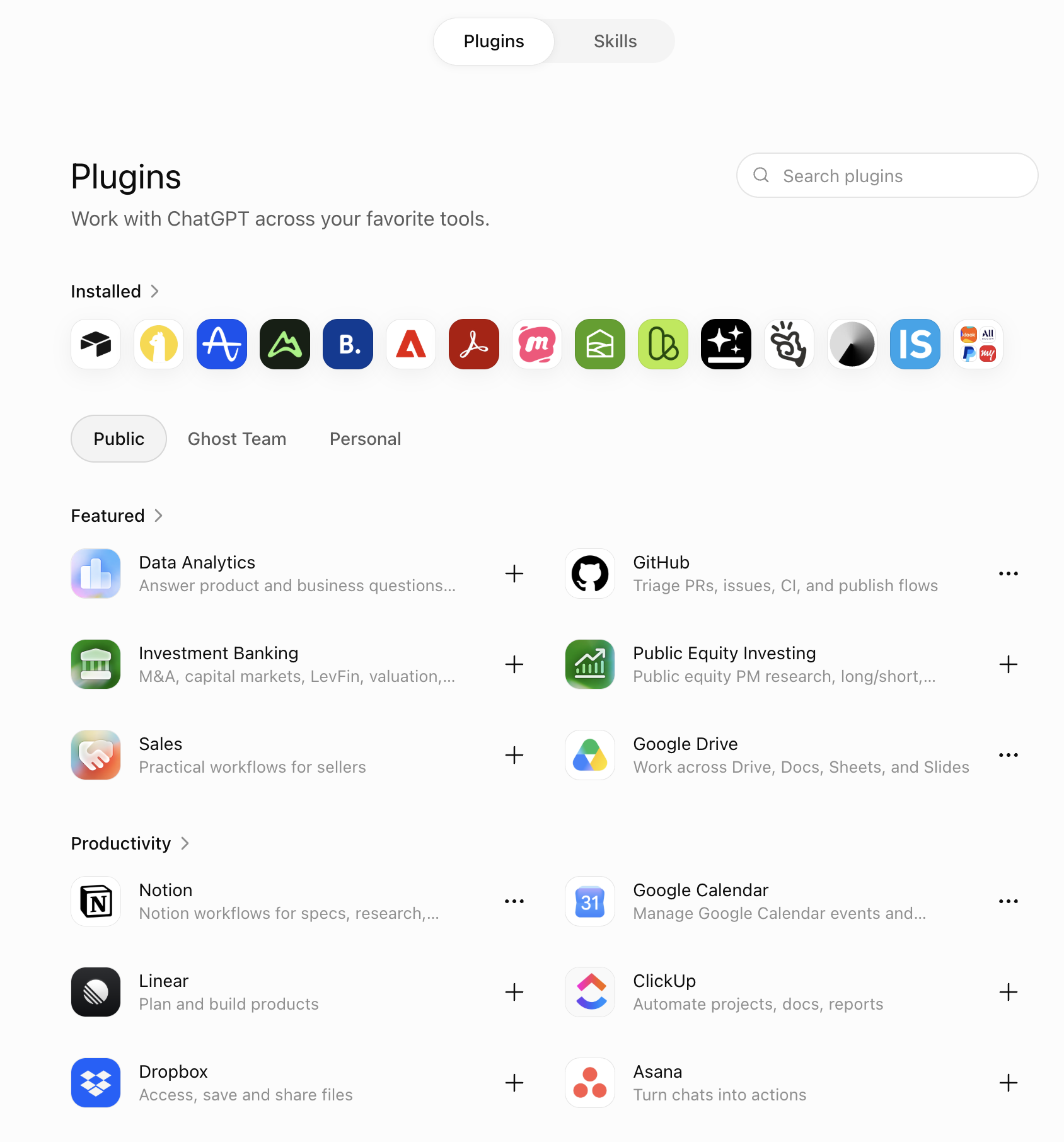
The big update for companies interested in getting their products and services used by agents is simple: the ChatGPT Plugin Directory has moved to the Plugin Directory, with all existing Apps packaged into Plugins.
The Plugin Directory is now the primary place to discover workflow capabilities across ChatGPT and Codex. It is available in ChatGPT web and desktop, ChatGPT Work, and ChatGPT Codex.
This landed alongside a broader ChatGPT release. In the OpenAI announcement, OpenAI introduced ChatGPT Work, its new agent for longer-running tasks across apps and files.
OpenAI also introduced GPT-5.6 for this next wave of work, and brought Chat, Work, and Codex into one ChatGPT desktop app, which some are already describing as a Super App.
What Is a ChatGPT Plugin?
The simplest definition is this: a Plugin is a packaged capability for a workflow.
A Plugin can include Skills, Apps, and App templates. Skills provide reusable instructions, prompts, and workflow patterns. Apps connect ChatGPT or Codex to external systems, data, and actions, while App templates help admins create or configure an App a Plugin needs.
An App remains the integration that connects ChatGPT or Codex to an external service. The Plugin is the workflow package around those capabilities, and it can combine one or more Apps and Skills for B2C and B2B workflows.
Plugins can be available across ChatGPT web and desktop, ChatGPT Work, and ChatGPT Codex. Whether someone can install or use a Plugin depends on their plan, workspace settings, role, supported surface, region, and the capabilities of its included Apps.
A single Plugin may contain multiple Skills and Apps, allowing it to support a broader workflow without users manually switching between separate tools.
That changes distribution. Your product or service can be understood, selected, and used when the work is actually happening across OpenAI's surfaces and users.
What Happens If You Already Have a ChatGPT Plugin?
If you already had a ChatGPT Plugin, OpenAI has packaged it into a Plugin. Existing App connections remain unaffected.
Your App has not stopped being an App. It remains the integration that connects ChatGPT or Codex to external data and actions, and it now sits inside a Plugin in the new Plugin Directory. That Plugin can also include Skills and App templates.
Users can keep using their existing App connection. When someone connects a new Plugin, they connect and authenticate its underlying App as before. Existing App permissions, action controls, and workspace access rules continue to apply to every Plugin that uses it.
You can submit, manage, update, and track Plugin review status through the OpenAI Platform Dashboard.
If you have submitted a Plugin or plan to, you can use our AI Registry Tracker to monitor the ChatGPT Plugin and Claude Connector ecosystem.
What We Know So Far About Organic Discovery
Before now, ChatGPT Plugin discovery was not organic.
A user usually had to know your brand, open the directory, find your Plugin, connect it, authenticate any underlying App, and then invoke it with @ or the + menu. That is closer to app store discovery than agent discovery.
The Plugin Directory is now the primary place to discover workflow capabilities across ChatGPT and Codex. Relevant Plugins can also be recommended and installed during eligible conversations. That is the start of organic discovery inside ChatGPT.
It also points in the same direction Anthropic has already taken with Claude Connectors, where connectors can surface inside conversations when a user expresses intent. You can read more about that here: Organic Discovery in Claude.
For ChatGPT Plugin discovery, the question changes from: can a user find us in the directory? to: can ChatGPT understand when our Plugin is the right tool for the work?
A user describes the job. ChatGPT recognizes the need. The right Plugin can be surfaced in the flow of work. That is the shift from no real organic discovery to organic discovery starting to emerge.
The Discovery Loop Starts Today
This change creates a new discovery optimisation surface.
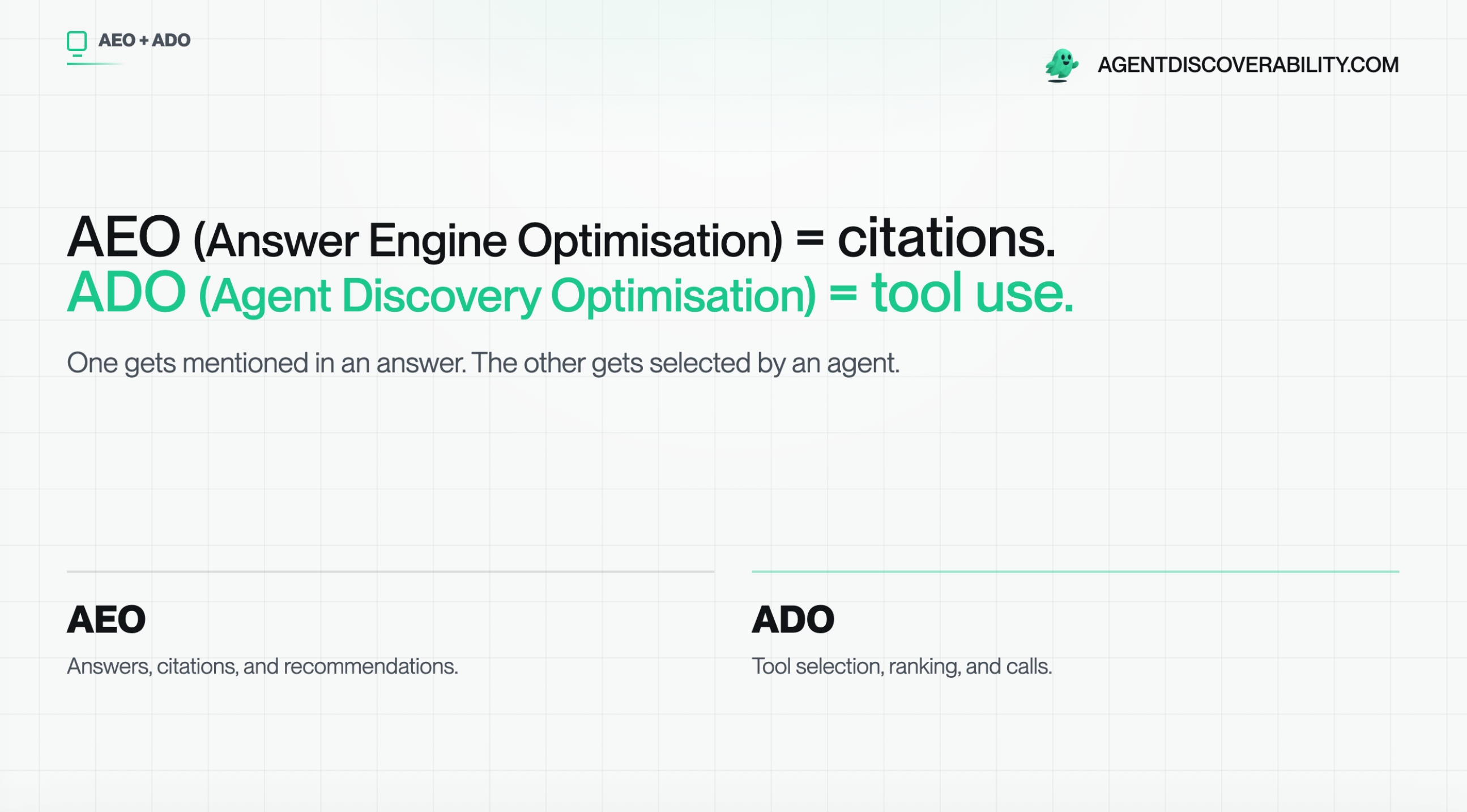
AEO was about citation: getting mentioned in an answer. ATO is about tool selection: getting picked as the app, connector, or Plugin the agent actually uses.
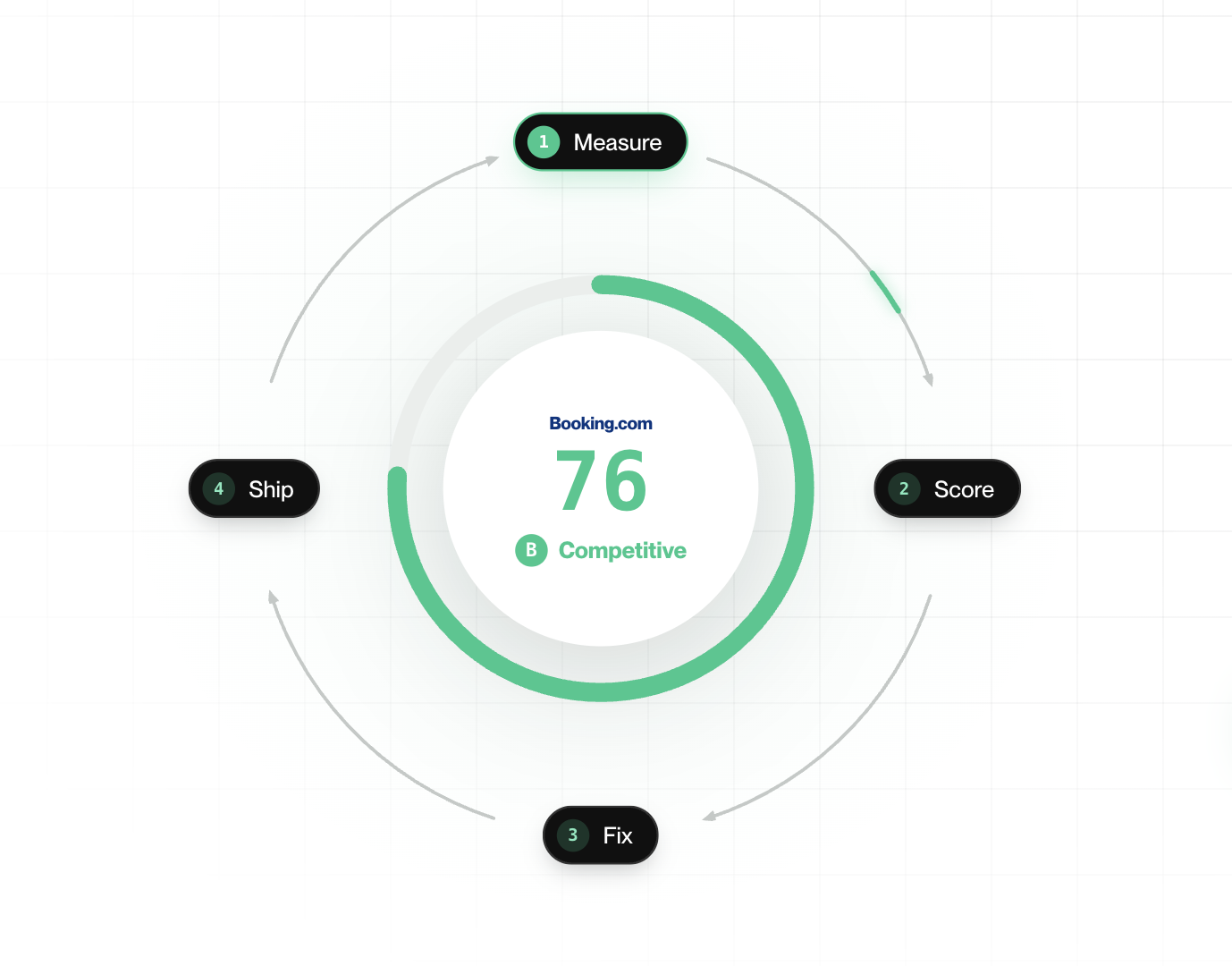
We are already helping major companies optimise for organic discovery of their Claude Connectors. The same operating model applies to ChatGPT Plugins: measure whether agents can find your Plugin in real prompts, score your Plugin's discoverability, fix the areas that will lead to a lift in discoverability for your target prompts, and ship the changes. Then measure again to see whether discovery improved.
What we have learned is that organic discovery is not a one-time launch task. It is a loop.
Measure, score, fix, and ship, then run the loop again. Each new measurement shows whether the changes improved discovery and where the next weak point is.
That loop matters because the surface is going to keep changing. Models change. Directories change. Recommended Plugins change. The companies that learn fastest, monitor continuously, and improve every week will have the advantage.
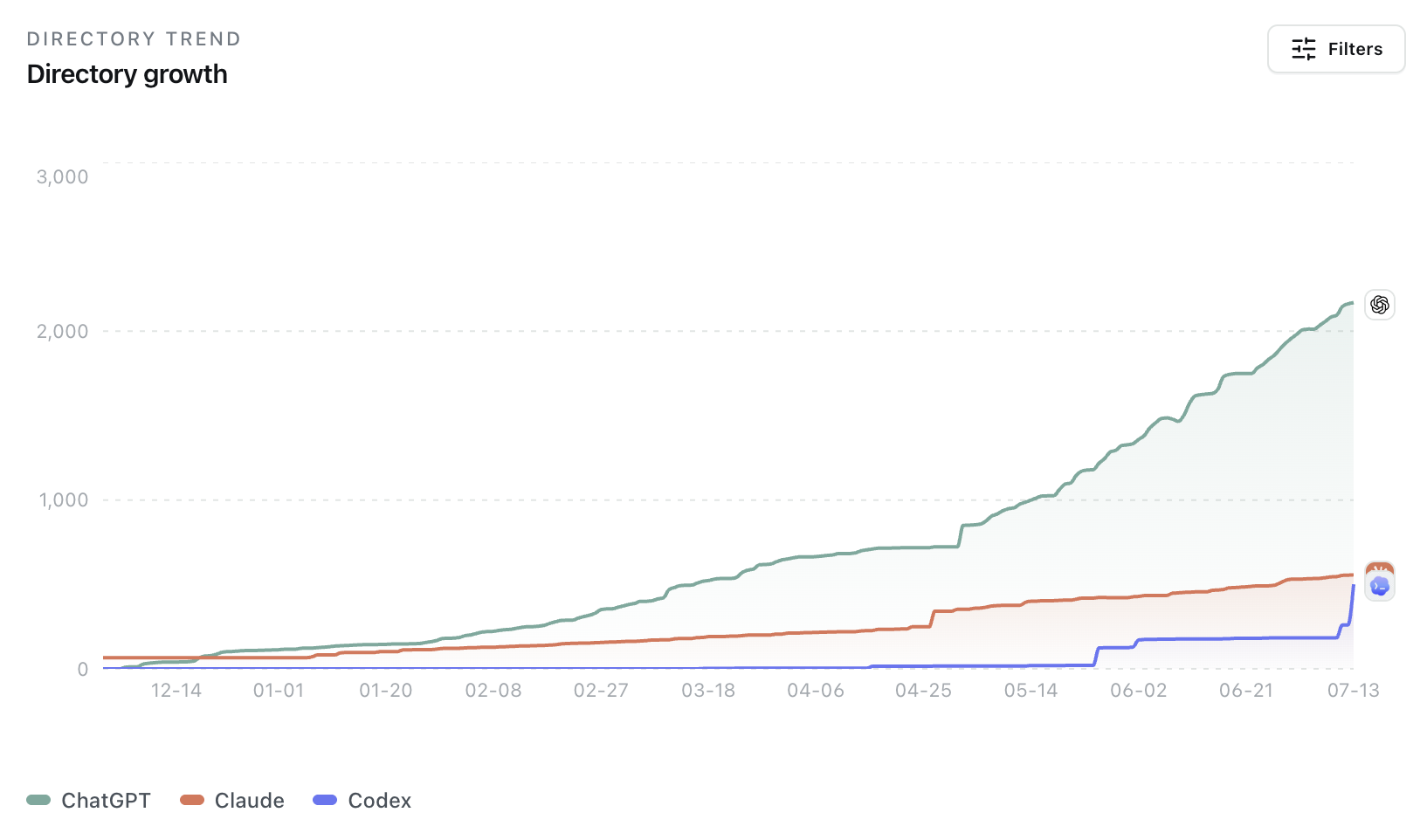
For teams that want to track the ChatGPT Plugin and Claude Connector ecosystem, AgentDiscoverability Track shows directory growth, category movement, and ecosystem changes over time.
The Practical Takeaway
If your product can help someone complete work in ChatGPT, you should be thinking about Plugins now.
The opportunity is not just being listed. It is being found, understood, selected, and used by agents at the exact moment your customer asks for help.
We are already working with Fortune 500 teams and startups to build their Plugins and Connectors and working with teams that have Claude Connectors to optimise their apps for better discovery. If you have a ChatGPT Plugin or Claude Connector and want to appear organically and get more users, reach out.
ChatGPT Plugin FAQ
Quick answers about the ChatGPT Plugin Directory and what it means for products that want to be used inside ChatGPT.
What is a ChatGPT Plugin?


A Plugin is a packaged capability for a workflow. It can include Skills, Apps and App templates. Skills provide reusable instructions and workflow patterns, Apps connect ChatGPT or Codex to external systems, data and actions, and App templates help admins configure an App a Plugin needs.
Where can ChatGPT Plugins be used?
Plugins can be available across ChatGPT web and desktop, ChatGPT Work and ChatGPT Codex. Whether someone can install or use a Plugin depends on their plan, workspace settings, role, supported surface, region and the capabilities of the Plugin's included Apps.
What happened to ChatGPT's App Directory?
It has moved to the Plugin Directory, and existing Apps have been packaged into Plugins. The Plugin Directory is now the primary place to discover workflow capabilities across ChatGPT and Codex.
What happens to my existing App?
Your App is still the integration that connects ChatGPT or Codex to external data and actions, and it now sits inside a Plugin. Existing App connections remain unaffected, and existing App permissions, action controls and workspace access rules continue to apply to every Plugin that uses it.
How do I submit or manage a ChatGPT Plugin?
You can submit, manage, update and track Plugin review status through the OpenAI Platform Dashboard.
Can ChatGPT suggest my Plugin to users who have never heard of it?
Relevant Plugins can be recommended and installed during eligible conversations, which is the start of organic discovery inside ChatGPT. See how ChatGPT Plugin discovery works and how to get suggested.
Related reading
- ChatGPT Plugin discovery: how to get suggested. How ChatGPT decides which Plugins to suggest, and how to get yours picked.
- ChatGPT Plugin and Claude Connector directories explained. How customers find and use products inside ChatGPT and Claude.
- ChatGPT Plugin discoverability: the complete guide. Metadata, prompt testing and optimization for ChatGPT Plugins.
- MCP Directory: every ChatGPT Plugin and Claude Connector. Search and compare listings, ranked and updated daily.
- Check your Discoverability Score. See how well agents find and pick your product.