TaskLite
Instant backend: database, REST API, and a ready admin
- Category
- Developer Tools
- Primary Subcategory
- Databases & Backend Data Stores
 View in the Claude registry
Integration details
Description
Give any app you dream up a full backend — in the same conversation you're already coding in. Ask, and Claude spins up a real database, secure REST APIs, and a ready-made admin in seconds. No infrastructure to set up, nothing to provision. Build the frontend; TaskLite is the backend. The moment you need a backend, you don't stop to stand one up — you just ask. TaskLite creates the database (projects, boards, typed columns), seeds data, and exposes secure REST endpoints with per-user row-level security that your frontend consumes immediately. It all happens inside the conversation: no console, no schema migrations, no server to deploy, no separate signup. That turns "I have an idea for an app" into a working full-stack build in minutes: Claude writes the frontend, TaskLite is the instant backend behind it. And unlike a bare database, every backend ships with the operational layer a real product needs — a ready admin the app owner runs, plus statuses, approvals, comment threads, and file handling. So the app you build in a moment is one someone can actually operate on day one.
- Integration type
- Connector
- Verification status
 Community connector
- Platform
- Claude
- Primary Subcategory
- Databases & Backend Data Stores
- Secondary Subcategories
- None listed
- Brand
- TaskLite
- Access
- Account required
- First tracked
- 2026-07-26
- Tool count
- 21
- Geography
- US
The Primary Subcategory used for this profile’s headline score.
Other Subcategories where the Integration is listed.
Claude Discoverability Score
Claude Connector discovery is coming soon
Community Connectors only appear in Claude’s registry.Once verified, organic discovery begins and we can calculate your score.Read more about Community Connector verification.
No spam. Unsubscribe any time.
No spam. Unsubscribe any time.
What discovery looks like
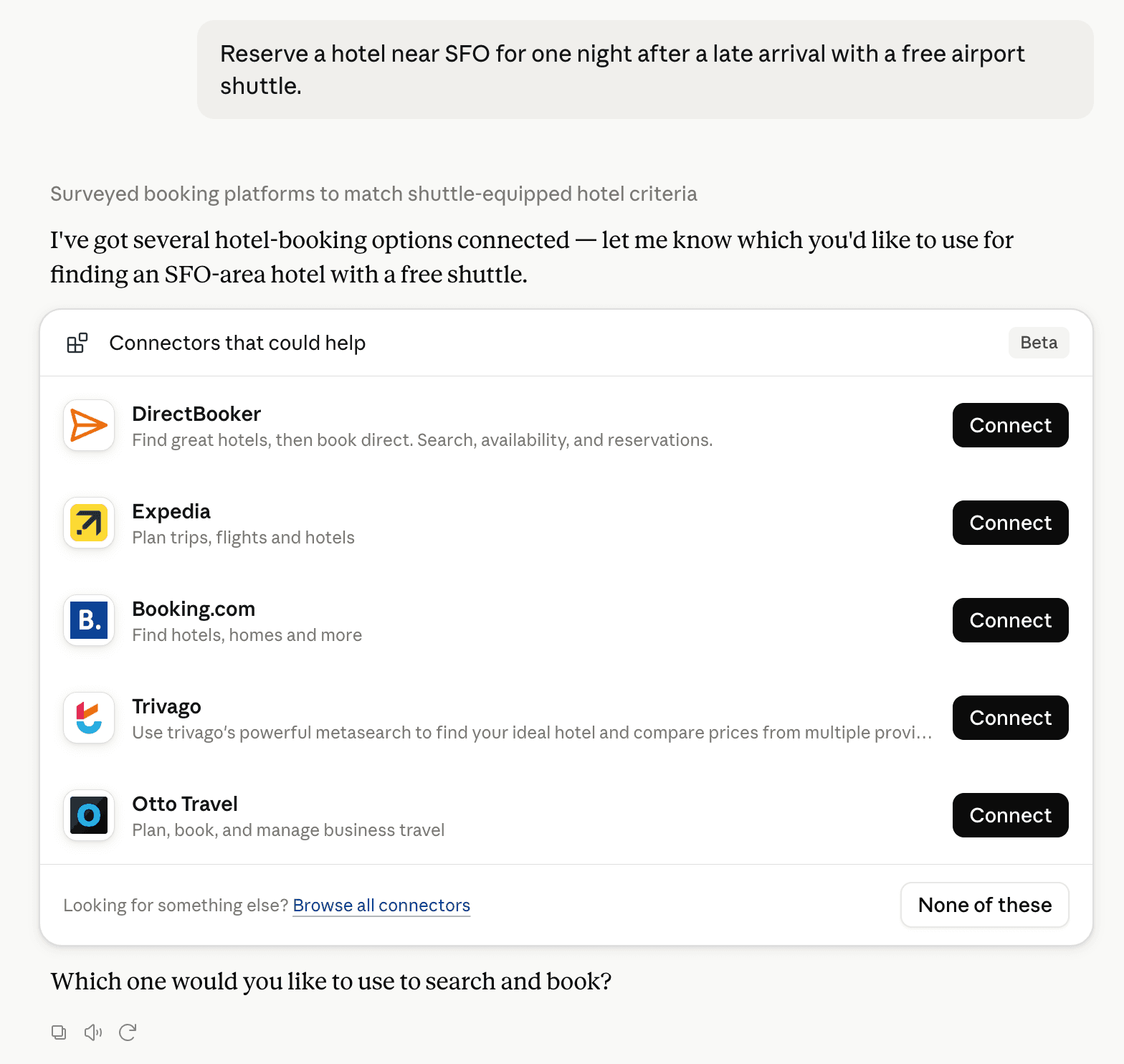
Claude can surface verified Connectors when they match a user’s Prompt.
How Claude Connector discovery works
Your Connector will compete to appear for users’ Prompts once Claude verifies it
Competing in Claude Databases & Backend Data Stores
View Category21 tools agents can invoke
How do I improve a Community connector's discoverability?
The levers are the listing surface agents actually read: names, descriptions, keywords, tool metadata, and registry health. Which lever matters depends on where discovery breaks, which is what continuous measurement shows.
What are TaskLite alternatives on Claude?
As of 2026-09-28, TaskLite competes with Airtable, MongoDB Atlas, Neon, PlanetScale, Supabase, AALY, Magicweave, MCPBackend, Prisma in Claude Databases & Backend Data Stores, ranked by public Discoverability Score.
Where is this profile measured?
This profile uses the geography attached to the latest public registry snapshot: US. Locale tags are intentionally omitted.