Refine.ink
AI proofreader for serious academic and technical writing — it critiques your manuscript like an expert reviewer, surfacing flaws in arguments, methods, and rigor.
- Category
- AI
- Primary Subcategory
- Academic Writing & Citation Tools
 View in the Claude registry
Integration details
Description
Refine is an AI-powered proofreading and critique engine built for researchers, academics, and technical writers — the people whose work is judged on the soundness of its arguments, not just its grammar. Unlike generic writing assistants that draft or paraphrase text for you, Refine deliberately does the opposite: it acts as a rigorous expert reviewer. You upload a document (PDF, DOCX, and more), and Refine analyzes it the way a demanding peer reviewer or editor would — interrogating the logic of your arguments, auditing the statistics and mathematics behind your results, flagging unsupported claims, methodological gaps, inconsistencies, and weaknesses in structure and exposition. It returns detailed, anchored feedback comments tied to specific passages, each with a clear justification and concrete suggestions for improvement. The core philosophy is critique, not draft. Refine never hands you replacement prose to paste in; it tells you what's wrong and why, leaving the authorship — and the thinking — with you. This is the wedge that distinguishes it from tools like ChatGPT, Thesify, or coarse.ink: it strengthens the author rather than substituting for them, which is exactly what scholarly and grant-funded writing demands. Beyond one-shot feedback, Refine lets you chat with an AI assistant about each comment — to get explanations, push back, or work through how to address an issue. It tracks which comments you've addressed across revisions, supports sharing reviews with collaborators, and is increasingly used by institutions: universities, research organizations, and partners like the Econometric Society value its detailed technical auditing of results and arguments. Refine serves individual researchers (per-document and subscription plans) as well as teams and institutions, with a growing focus on grant applications and high-stakes academic submissions where the cost of a weak argument is highest.
- Integration type
- Connector
- Verification status
 Community connector
- Platform
- Claude
- Primary Subcategory
- Academic Writing & Citation Tools
- Secondary Subcategories
- None listed
- Brand
- Refine
- Access
- Account required
- First tracked
- 2026-06-24
- Tool count
- 35
- Geography
- US
The Primary Subcategory used for this profile’s headline score.
Other Subcategories where the Integration is listed.
Claude Discoverability Score
Claude Connector discovery is coming soon
Community Connectors only appear in Claude’s registry.Once verified, organic discovery begins and we can calculate your score.Read more about Community Connector verification.
No spam. Unsubscribe any time.
No spam. Unsubscribe any time.
What discovery looks like
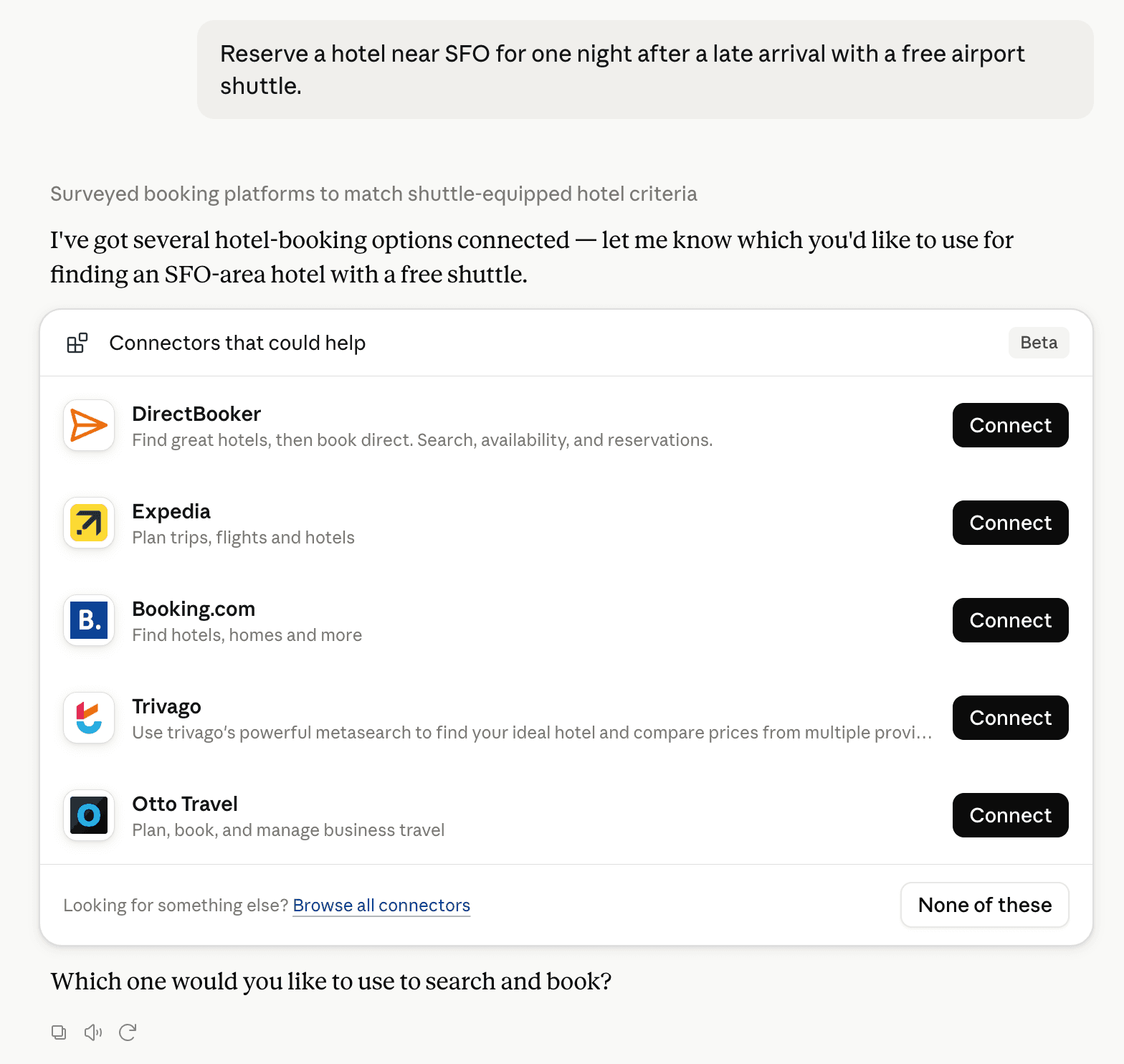
Claude can surface verified Connectors when they match a user’s Prompt.
How Claude Connector discovery works
Your Connector will compete to appear for users’ Prompts once Claude verifies it
Competing in Claude Academic Writing & Citation Tools
View Category35 tools agents can invoke
How do I improve a Community connector's discoverability?
The levers are the listing surface agents actually read: names, descriptions, keywords, tool metadata, and registry health. Which lever matters depends on where discovery breaks, which is what continuous measurement shows.
What are Refine.ink alternatives on Claude?
As of 2026-09-28, Refine.ink competes with mazdek AI in Claude Academic Writing & Citation Tools, ranked by public Discoverability Score.
Where is this profile measured?
This profile uses the geography attached to the latest public registry snapshot: US. Locale tags are intentionally omitted.