Minutes Conversation Memory
The private, owned conversation-memory layer for AI. Record, transcribe, and search every meeting, voice memo, and dictation entirely on your own machine — nothing uploaded — then let any AI you connect recall it. Plain-markdown output you keep forever; no cloud, no API key, no vendor to outlive.
- Category
- Productivity
- Primary Subcategory
- Meeting Notes & Call Intelligence
 View in the Claude registry
Integration details
Description
Minutes is the private, owned conversation-memory layer. Record meetings, voice memos, and dictation; transcribe them on your own machine; and get structured markdown in `~/meetings/` that policy-aware local tools expose to Claude Desktop, Claude Code, Codex, Gemini CLI, Cursor, OpenCode, Pi, and MCP-compatible clients — no proprietary SDK, no API key. Restricted meetings are excluded from agent results by default; explicit access requires a trusted launch policy, a per-call request, and a durable audit record. Minutes never uploads your audio; meeting text leaves your device only when you explicitly send policy-authorized context to a connected cloud agent or summarizer. When a cloud memory tool gets acquired or subpoenaed, your recordings aren't theirs to hand over. No vendor to outlive — ten years from now, `grep` still works on your corpus. 34 tools • 11 resources • Interactive MCP App dashboard • 6 prompt templates What you get: • On-device transcription with sealed local whisper.cpp and optional on-device summarization (Apple Foundation Models on macOS 26+) — your audio never leaves the machine. Retained Parakeet and Apple Speech preferences resolve to Whisper until those helpers support secure byte transport. • Re-run the AI pass on edited meetings and memos with preview-first output, backup-on-apply writes, and edit-preserving merges. • A native chat panel that recalls policy-authorized meetings, with token streaming and read-only policy-bound search. • Dictation that types straight at your cursor, on the same local engine. • Live sessions that promote into diarized, summarized meetings when you stop. • Consent provenance in every file, and sensitivity gating agents must respect. • Diarized speaker labels, structured action items and decisions, and policy-safe search over owned markdown. Cross-meeting relationship answers are rebuilt from bounded live policy-authorized snapshots; compatibility-only derived insight and annotation reads still fail explicitly until their source provenance can be revalidated. **Before you start.** Minutes runs entirely on your own machine, so it needs the Minutes engine installed locally. The extension normally downloads it for you the first time it runs. If your machine cannot reach the internet, or you are on a platform we do not publish a binary for, install it yourself: on macOS and Windows get the free desktop app from https://useminutes.app, which includes the engine and keeps it updated; on Linux install the CLI from the same page. Until the engine is present the extension still starts and lists its tools, and each tool will tell you what is missing.
- Integration type
- Connector
- Verification status
 Verified connector
- Platform
- Claude
- Primary Subcategory
- Meeting Notes & Call Intelligence
- Secondary Subcategories
- None listed
- Brand
- Minutes
- Access
- Unknown
- First tracked
- 2026-08-15
- Tool count
- 34
- Geography
- US
The Primary Subcategory used for this profile’s headline score.
Other Subcategories where the Integration is listed.
Claude Discoverability Score
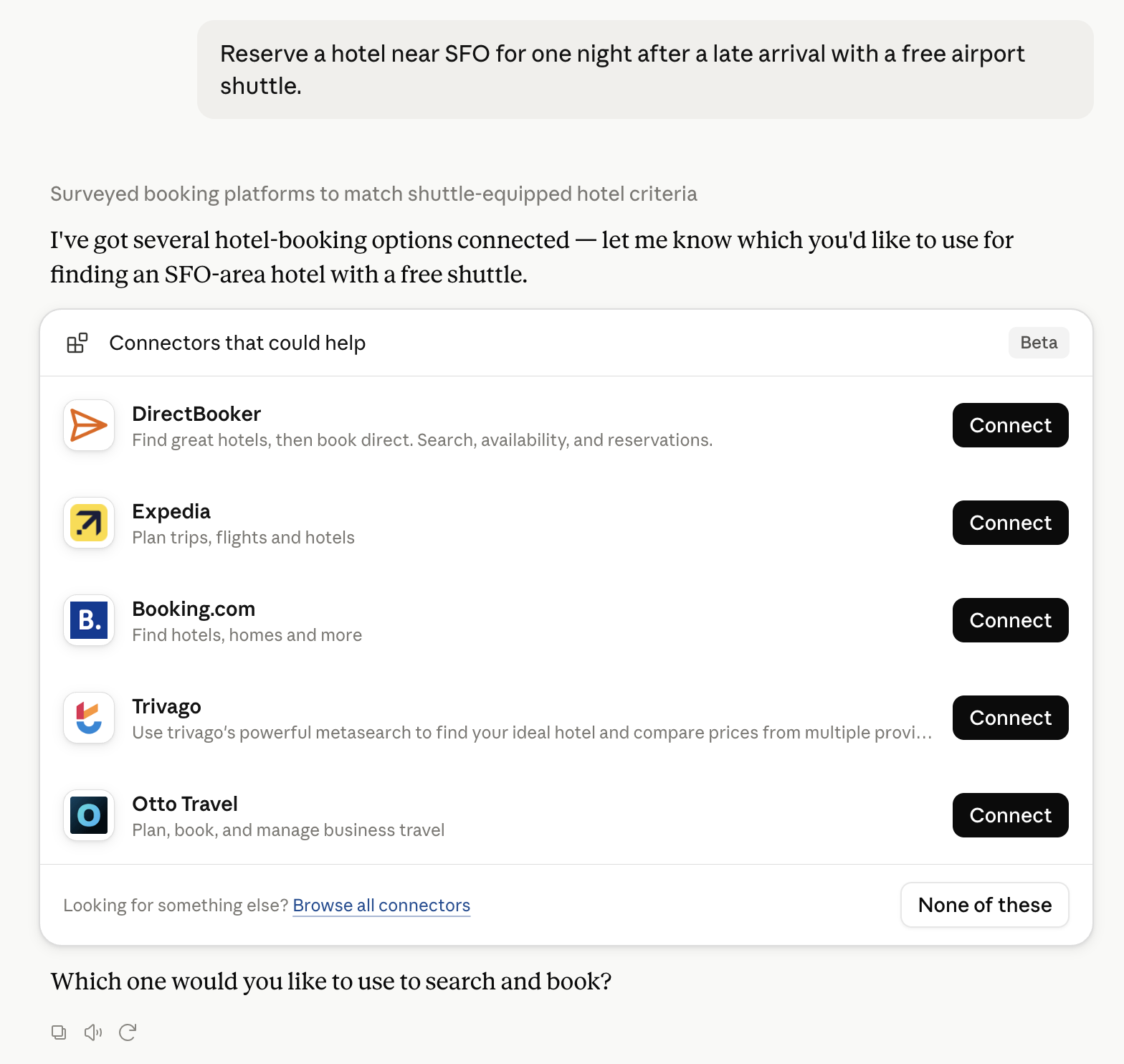
Minutes Conversation Memory isn’t discoverable through Claude’s Connector picker
It runs as a local Claude Desktop Extension, so Claude cannot surface or score it there today.
No spam. Unsubscribe any time.
No spam. Unsubscribe any time.
What the current score measures
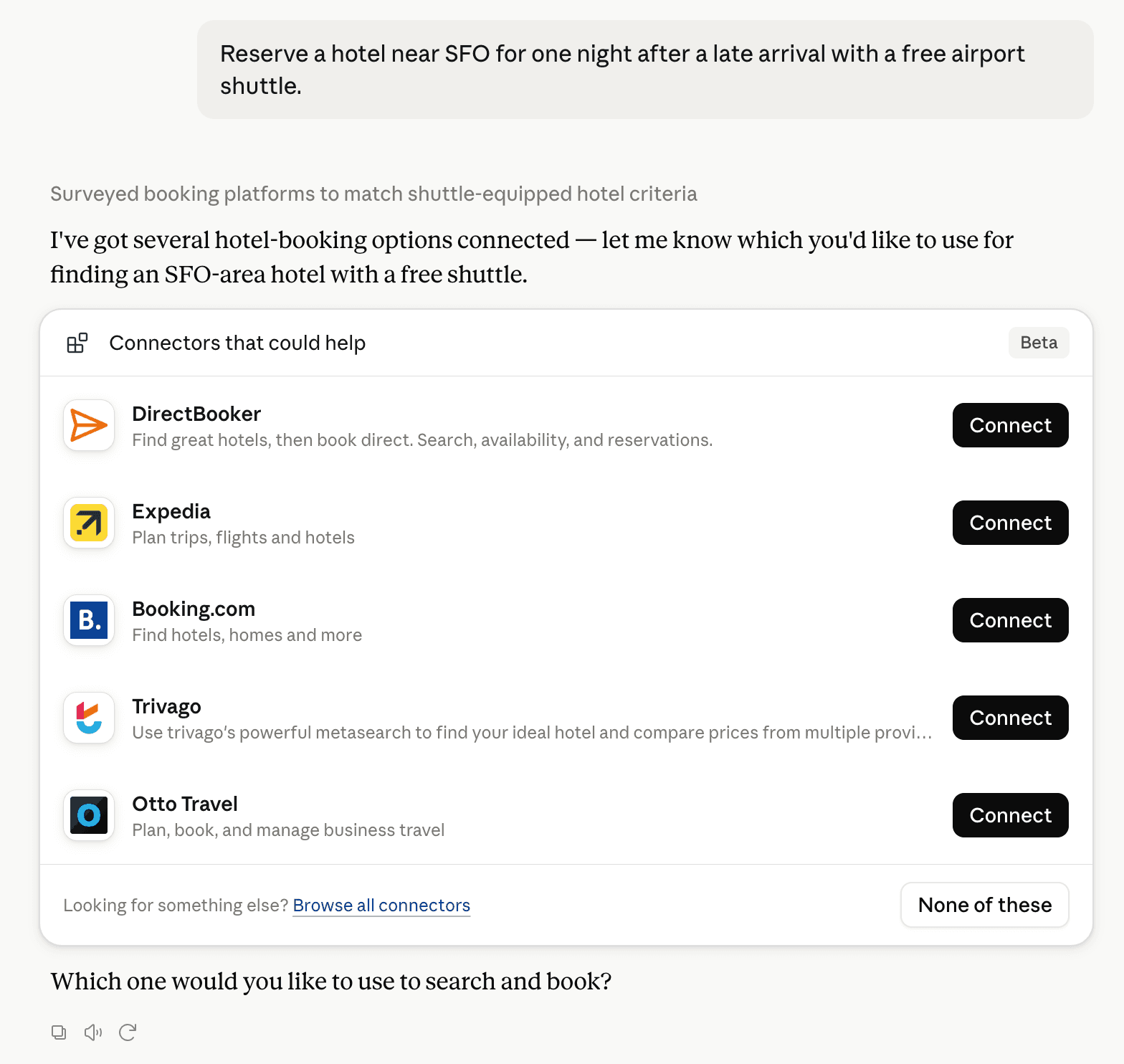
Remote Connectors Claude can surface from the Connector picker.
About Claude's Discoverability Score
Your Connector now competes to appear for users’ prompts
34 tools agents can invoke
How do I improve a Verified connector's discoverability?
The levers are the listing surface agents actually read: names, descriptions, keywords, tool metadata, and registry health. Which lever matters depends on where discovery breaks, which is what continuous measurement shows.
Where is this profile measured?
This profile uses the geography attached to the latest public registry snapshot: US. Locale tags are intentionally omitted.